

Drainage Solutions
Done Right Landscapes™ is the premier company to call in St. Charles, St. Louis & Chesterfield for professional site leveling and water management.
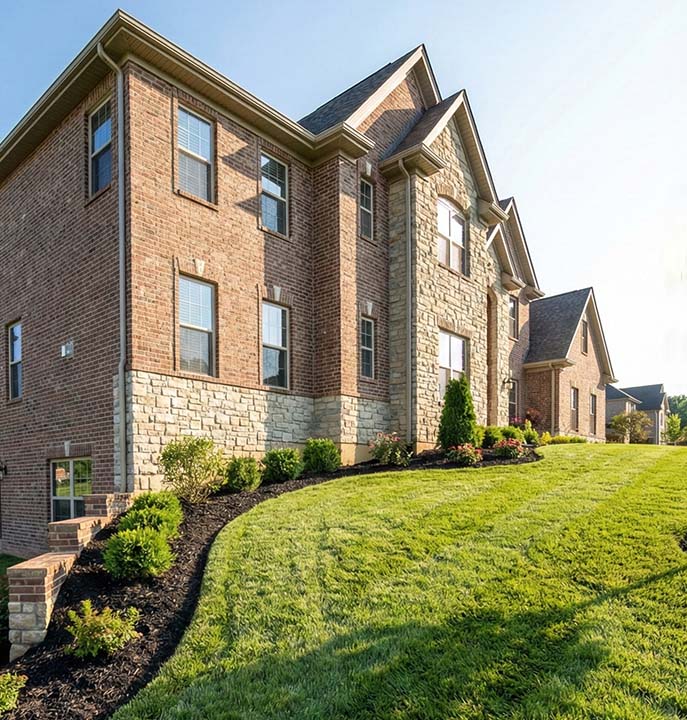
Experts in Drainage Solutions
Professional yard regrading and water mitigation are essential ways to enhance the structural integrity of your St. Charles property.
Planning the correct elevation and positive grade is one of Done Right Landscapes™ specialties.
We utilize specialized equipment and precise measurements to correct the flow of runoff and ensure your backyard remains a usable oasis.
Water mitigation projects are always highly technical, but they are one of the most critical types of property maintenance to install correctly.
Expertise in technical regrading and landscape mitigation is extremely difficult to find. Not only does Done Right Landscapes™ have over 15 years of experience in managing complex water flow issues, but we also have an A+ Rating with the Better Business Bureau!
Water Management: Swales, Berms, and Soil Correction
Strategic surface swales and berms can not only add safety to your outdoor property, but they can make an otherwise non-usable space functional again.
Our landscaping designers will calculate the most appropriate elevation path for your specific lawn and foundation needs.
Give us a call today to set up your Free Consultation with a water management professional today!
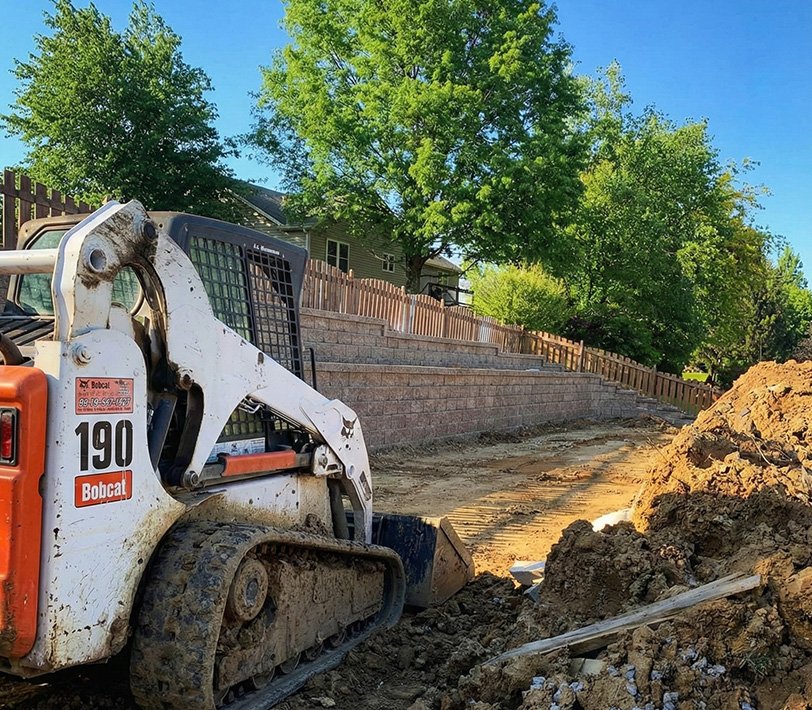
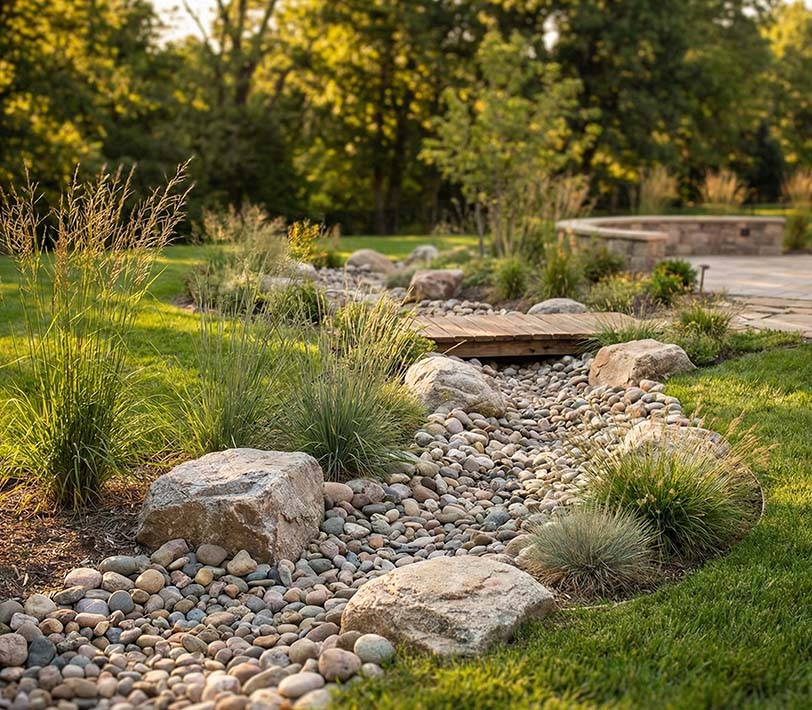
Many Options
We offer a wide variety of mitigation and regrading strategies to choose from. In addition to a wide selection of different soil types, sod, and erosion control blankets, we also have a vast variety of hardscape barrier options as well.
We understand that it can be difficult to determine exactly what your yard needs by looking at a website.
Our technicians can help you along the way to choose the right elevation plan for your property’s personality.
Our landscape designers will supply site assessments to help you determine what type of materials would be most effective for your soil type. Also, there is a storefront where you can look at actual material samples and project results as well.
Done Right Landscapes Does Water Mitigation Right.
We’re passionate about creating exceptional outdoor spaces that enhance the beauty, functionality, and value of your St. Charles property.
Our regrading services are no exception, offering you a world of possibilities to transform your saturated areas into dry, stable extensions of your home. Call Done Right Landscapes™ for more details.
As much as our solutions are visually integrated, they have the high-level utility you’re looking for to complete your landscape architecture.
We offer many different grades and textures to compliment your property’s specific needs. Our landscape team has over 25 years of experience, so rest assured your next regrading project will be installed by the best team in the St. Louis area.
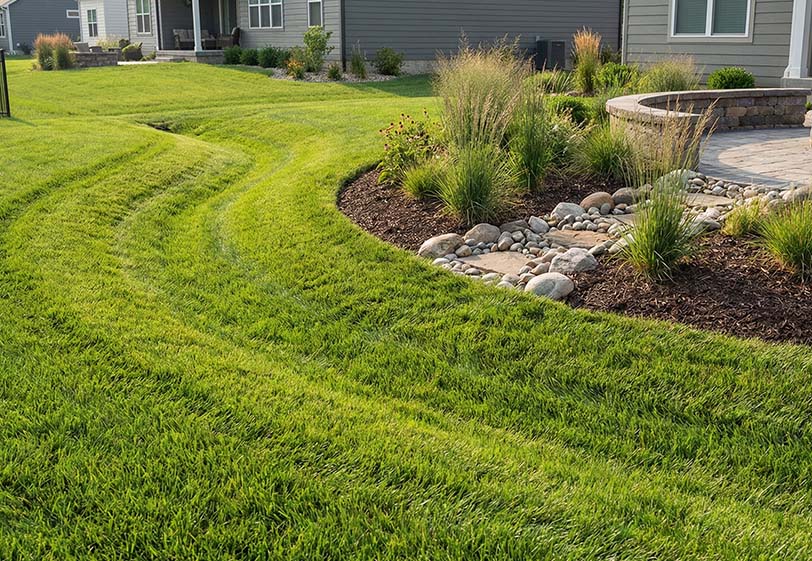
Drainage Solutions FAQs
Direct Answer
Standing water in your yard is a problem because it can damage your home’s foundation, kill grass and plants, and create long-term soil instability. In the St. Louis and St. Charles area, repeated pooling after rain often signals that water is not draining away from the home as it should.
Why This Happens
Missouri’s clay-heavy soils absorb water slowly and stay saturated longer than sandy soils. When combined with flat or poorly directed grading, water settles in low areas instead of moving toward the street or approved drainage paths. Frequent heavy rain events in this region make the problem worse over time.
Signs This Is a Problem
• Water pooling that remains for more than a day after rainfall
• Grass thinning or bare patches in low areas
• Soft, unstable ground that sinks under foot traffic
• Water staining or dampness along foundation walls
• Increased mosquito activity near puddled areas
Typical Solutions
• Regrading to restore proper water flow away from the home
• Surface drainage features like swales or dry creek beds
• Subsurface drainage systems to relieve saturated soil
• Redirecting downspouts and runoff sources
Experience Insight
In many St. Louis–area neighborhoods, standing water starts as a minor inconvenience but gradually leads to foundation concerns or landscape failure. Homes built on relatively flat lots or near natural drainage paths tend to show these issues first, especially after seasons with above-average rainfall.
Direct Answer
You likely have a drainage problem if water consistently pools in your yard, takes more than a day to soak in after rain, or causes damage near your foundation or hardscape. In the St. Louis and St. Charles area, these issues often show up after heavy storms when soil can’t absorb water fast enough.
Why This Happens
Much of Missouri has dense clay soil, which drains slowly and becomes compacted over time. Combined with flat grading, aging neighborhoods, and frequent heavy rain events, water has nowhere to go and begins collecting in low areas. Downspouts, neighboring properties, or changes to nearby grading can also concentrate runoff into your yard.
Signs This Is a Problem
• Standing water that remains 24–48 hours after rain
• Soggy or spongy turf that never fully dries
• Muddy areas where grass won’t grow
• Water collecting near the foundation or basement leaks
• Erosion, exposed roots, or washed-out soil
• Algae or mosquito activity in low spots
Typical Solutions
• Yard regrading to redirect surface water
• Subsurface drainage systems to move water underground
• Swales or dry creek beds to manage runoff naturally
• Adjusting downspout discharge locations
• Retaining or edge solutions to control slope-related runoff
Experience Insight
In St. Louis–area yards, drainage problems are often mistaken for lawn or soil issues when the real cause is improper grading from the original build or later landscape changes. Many properties look fine in dry weather but reveal drainage failures after consecutive storms, especially in older subdivisions with compacted clay soils.
Direct Answer
Poor yard drainage in St. Louis is most commonly caused by heavy clay soil, flat or improper grading, and concentrated runoff from roofs or neighboring properties. These conditions prevent water from soaking in or flowing away efficiently after rain.
Why This Happens
Much of the St. Louis and St. Charles region sits on dense, clay-heavy soils that drain very slowly and compact easily. Many lots were graded flat during original construction, which limits natural water movement. Over time, soil compaction from foot traffic, equipment, and construction further reduces absorption, while heavy Missouri rain events overwhelm already limited drainage paths.
Signs This Is a Problem
• Standing water after normal rainfall
• Soil that stays wet or sticky days after storms
• Grass thinning or dying in low areas
• Water flowing toward the house instead of away from it
• Erosion or sediment buildup in certain parts of the yard
Typical Solutions
• Correcting yard grading to promote positive drainage
• Adding surface drainage features to guide runoff
• Installing subsurface drainage to relieve saturated soil
• Managing roof and neighboring runoff more effectively
Experience Insight
In St. Louis–area properties, poor drainage is often inherited from the original lot grading rather than something homeowners caused. Yards may perform adequately during dry periods but fail quickly during consecutive rain events, which is typical in Missouri’s spring and early summer weather patterns.
Direct Answer
Yes, standing water is bad for your home’s foundation because it keeps soil saturated and increases pressure against foundation walls. In the St. Louis and St. Charles area, this can contribute to cracking, settling, and long-term structural issues.
Why This Happens
Clay-rich Missouri soils expand when wet and shrink as they dry. When water consistently pools near the foundation, the soil stays swollen and unstable, placing uneven pressure on foundation walls and footings. Poor grading and heavy regional rainfall make this cycle more severe over time.
Signs This Is a Problem
• Water pooling along the foundation after rain
• Cracks in foundation walls or basement floors
• Basement dampness or water intrusion
• Doors or windows sticking or shifting
• Soil pulling away from the foundation during dry periods
Typical Solutions
• Regrading to move surface water away from the foundation
• Improving surface drainage near the home
• Installing subsurface drainage systems around problem areas
• Redirecting downspouts away from the foundation
Experience Insight
In many St. Louis homes, foundation problems linked to drainage develop gradually and are often overlooked until interior symptoms appear. Properties with minimal slope away from the house or older drainage layouts are especially vulnerable after repeated heavy rain seasons.
Direct Answer
Yes, poor drainage can directly cause basement leaks and contribute to mold growth. In St. Louis and St. Charles homes, excess water around the foundation often finds its way through small cracks or porous concrete, leading to moisture problems inside the basement.
Why This Happens
Missouri’s clay soils hold water and expand when saturated, which increases pressure against foundation walls. When water is allowed to pool near the home due to poor grading or inadequate drainage, it pushes moisture through foundation joints, cracks, or block walls. Frequent heavy rain events in the St. Louis region increase how often this pressure occurs, keeping basements damp for extended periods.
Signs This Is a Problem
• Water seeping into the basement after rainfall
• Damp or musty smells in basement areas
• Visible mold or mildew on walls, floors, or stored items
• Efflorescence (white powdery residue) on foundation walls
• Peeling paint or discoloration on basement surfaces
Typical Solutions
• Improving exterior grading to move water away from the foundation
• Managing surface water with swales or drainage features
• Installing subsurface drainage to relieve soil saturation
• Redirecting downspouts and roof runoff away from the home
Experience Insight
In the St. Louis area, many basement leaks are not caused by the foundation itself but by water being allowed to sit too close to it. Homes with otherwise sound foundations often develop moisture and mold issues simply because exterior drainage was never properly addressed or has changed over time.
Direct Answer
A swampy or soggy lawn is fixed by correcting how water moves and drains through your yard, not by adding more grass or soil alone. In St. Louis and St. Charles, this usually means addressing poor grading, clay-heavy soil, or excess runoff that keeps the ground saturated.
Why This Happens
Most Missouri lawns sit on dense clay soil that drains very slowly and compacts easily. When yards are flat, low, or graded incorrectly, rainwater has nowhere to go and lingers near the surface. Downspouts, neighboring properties, or natural drainage paths can also dump extra water into the lawn, keeping it wet long after storms pass.
Signs This Is a Problem
• Lawn stays muddy or spongy days after rain
• Standing water forms in the same areas repeatedly
• Grass thins out or dies in low spots
• Moss or algae appears instead of turf
• Foot traffic leaves deep impressions in the soil
Typical Solutions
• Regrading the yard to restore positive water flow
• Installing subsurface drainage to remove excess water below the surface
• Adding surface drainage features like swales or dry creek beds
• Redirecting downspouts and concentrated runoff
• Rebuilding problem areas with improved soil structure
Experience Insight
In the St. Louis area, soggy lawns are often blamed on “bad grass,” but the real issue is usually water trapped by clay soil and poor grading from the original build. Once drainage is corrected, lawns that struggled for years often recover quickly without constant reseeding or patching.
Direct Answer
For heavy clay soils, the most effective drainage solution is usually a combination of proper grading and subsurface drainage. In St. Louis and St. Charles yards, moving water away quickly is more reliable than trying to force clay soil to absorb it.
Why This Happens
Clay soils common across Missouri drain very slowly and hold water tightly, especially once compacted. After heavy rain, the soil becomes saturated near the surface, and additional water has nowhere to go. Because absorption is limited, drainage systems that redirect water—rather than relying on infiltration alone—work best in these conditions.
Signs This Is a Problem
• Standing water after moderate or heavy rainfall
• Soil that stays wet or sticky for days
• Repeated turf failure despite reseeding or soil amendments
• Water collecting near foundations or hardscape edges
• Runoff moving across the surface instead of soaking in
Typical Solutions
• Yard regrading to establish positive drainage away from structures
• Subsurface drainage systems that collect and move water underground
• Swales or shallow channels to guide surface runoff
• Dry creek beds in natural low areas to manage flow
• Redirecting downspouts away from clay-heavy zones
Experience Insight
In the St. Louis region, homeowners often try to fix clay drainage by adding topsoil or aerating, but these approaches rarely solve the problem on their own. Long-term success usually comes from giving water a clear exit path, especially during consecutive rain events common in Missouri spring and summer seasons.
Direct Answer
A French drain manages water below the surface by collecting groundwater and moving it away underground, while a yard drain captures water at the surface where it pools and carries it away through buried piping. In St. Louis–area yards, both are used often, but they solve different drainage problems.
Why This Happens
Missouri’s clay soils cause water to either sit on the surface or build up below ground, depending on grading and soil compaction. Surface pooling happens in low spots, while subsurface saturation occurs when water can’t move through dense clay. Different drainage systems are designed to address where the water problem starts.
Signs This Is a Problem
• Standing water in lawn depressions after rain
• Soggy soil even when no surface water is visible
• Water collecting near foundations or hardscapes
• Turf failure in the same areas year after year
• Runoff flowing across the yard during storms
Typical Solutions
• French drains: Used to relieve saturated soil and groundwater buildup below the surface
• Yard drains (area drains): Used to collect surface water from low spots and move it away
• Combination systems that handle both surface and subsurface water
• Grading adjustments to support either system’s effectiveness
Experience Insight
In St. Louis and St. Charles properties, drainage problems often need more than one approach. Many yards rely on yard drains for visible pooling but still struggle until subsurface water is addressed with a French drain, especially in heavy clay soils after repeated rain events.
Direct Answer
Yes, French drains do work in Missouri when they are designed for clay-heavy soils and installed with proper slope and discharge. In St. Louis and St. Charles, they are most effective for relieving saturated soil and groundwater pressure, not just surface puddles.
Why This Happens
Missouri soils contain a high percentage of clay, which drains slowly and holds water for long periods. After heavy or repeated rain, water builds up below the surface and moves sideways through the soil, often toward foundations or low areas. A French drain works by giving that trapped groundwater a controlled path to exit instead of remaining in the soil.
Signs This Is a Problem
• Yard stays soggy even when no standing water is visible
• Lawn feels soft or spongy days after rain
• Basement walls feel damp or show water staining
• Grass fails repeatedly in the same areas
• Water problems worsen after back-to-back storms
Typical Solutions
• French drains designed to intercept groundwater in problem zones
• Proper grading to prevent surface water from feeding saturated soil
• Combination systems that pair French drains with yard drains
• Discharging water to a lower elevation or approved drainage outlet
Experience Insight
In the St. Louis area, French drains are often criticized when they fail—but most failures are due to poor design, shallow installation, or nowhere for the water to go. When installed with the realities of Missouri clay soil in mind, they are a reliable solution for long-term drainage issues that surface fixes alone can’t resolve.
Direct Answer
Fixing a drainage problem typically takes anywhere from one day to several days, depending on the size of the yard and the type of drainage solution needed. In most St. Louis and St. Charles residential properties, common drainage corrections are completed within one to three days once work begins.
Why This Happens
Drainage timelines vary because Missouri yards often have multiple contributing factors, such as clay soil, poor original grading, and concentrated runoff. Simple surface issues can be corrected quickly, while subsurface drainage or regrading projects take longer due to excavation, soil conditions, and the need to establish proper slope. Weather can also affect timelines, especially during wet spring and early summer periods.
Signs This Is a Problem
• Water issues occur in multiple areas of the yard
• Standing water affects both lawn and foundation zones
• Yard remains inaccessible or muddy for days after rain
• Previous spot fixes failed to resolve the issue
• Drainage problems worsen after heavy or repeated storms
Typical Solutions
• Small surface drainage corrections completed in a single day
• Subsurface drainage systems requiring multiple work days
• Regrading projects that may take several days depending on soil volume
• Combination solutions that extend timelines due to coordination
Experience Insight
In the St. Louis area, most drainage projects are less about long construction timelines and more about proper planning. When drainage is addressed comprehensively rather than in isolated patches, the work is usually completed efficiently and avoids the need for repeated repairs later.
Direct Answer
Yard drainage solutions in the St. Louis area typically range from about $1,000 to $7,000+, depending on the problem’s severity and the type of system installed. Simple surface drainage fixes are on the lower end, while more extensive French drains or combined systems cost more. 
Why This Happens
Drainage costs vary because Missouri properties face different soil, grading, and runoff challenges. Heavy clay soil in the region slows water movement, increasing the work needed to move water away effectively. Solutions that involve deeper excavation, longer piping, or connection to storm systems raise labor and equipment costs. 
Typical Cost Ranges in St. Louis / Missouri
• French drains: Often $29–$45 per linear foot, or roughly $1,700–$4,500+ for typical yard systems. 
• Common installation range: Most homeowners in St. Louis–area counties pay about $1,145–$7,675 total for drainage installations. 
• Surface or yard drains: Usually lower cost than deeper French drains; basic surface system installs often start around $1,500–$4,000 (based on nearby Missouri area estimates). 
Cost Factors That Affect Price
• Total length of drainage lines and trenching needed
• Soil and site conditions (clay is harder to excavate)
• Depth and type of system (surface vs subsurface)
• Access and existing landscaping to protect
• Need for permits or storm system tie-ins
Experience Insight
In the St. Louis and St. Charles region, many drainage projects fall in the mid-range because clay soil and grading adjustments are common. Small, localized fixes can be affordable, but comprehensive yard or foundation drainage systems often land closer to the higher end of typical ranges due to soil and water volume challenges.
Direct Answer
Yes, many drainage problems can be fixed without tearing up the entire yard. In St. Louis and St. Charles, targeted drainage solutions are often used to correct specific problem areas while leaving most of the lawn and landscaping intact.
Why This Happens
Missouri drainage issues are usually caused by localized grading problems, clay soil saturation, or concentrated runoff rather than the whole yard failing at once. Because water follows predictable paths, drainage corrections can often be limited to low spots, foundation areas, or known runoff zones. Proper planning allows water to be intercepted and redirected with minimal disturbance.
Signs This Is a Problem
• Standing water only appears in certain areas
• Soggy soil is limited to low spots or near the foundation
• Drainage issues occur after heavy rain but not across the entire yard
• Lawn problems repeat in the same locations each year
• Previous landscaping is otherwise healthy
Typical Solutions
• Installing localized yard drains in specific low areas
• Using subsurface drainage lines that follow narrow trench paths
• Minor regrading focused on problem zones rather than the whole yard
• Swales or shallow channels that blend into existing landscape
• Redirecting downspouts without large-scale excavation
Experience Insight
In the St. Louis area, homeowners often expect drainage work to be disruptive, but most projects are more surgical than people realize. Many effective drainage systems are installed along natural water paths or edges of the yard, allowing the majority of turf and landscaping to remain untouched while still solving the underlying problem.
Direct Answer
The best time of year to install drainage in St. Louis and St. Charles is typically spring through fall, when the ground is workable and water issues are easier to identify. Most drainage projects are done between late March and early November.
Why This Happens
Missouri soil conditions and weather play a major role in timing. Clay soils are difficult to excavate when frozen in winter or overly saturated during prolonged wet periods. Spring and early summer often reveal drainage problems clearly due to frequent rain, while fall offers drier conditions that allow for efficient installation and proper grading before winter freeze–thaw cycles.
Signs This Is a Problem
• Standing water becomes visible after seasonal rains
• Yard stays muddy well into spring
• Drainage issues worsen during back-to-back storms
• Basement or foundation moisture appears during wet months
• Lawn damage increases during rainy seasons
Typical Solutions
• Spring or early summer installation when problems are most visible
• Summer projects scheduled during drier stretches for efficiency
• Fall installations to prepare yards for winter moisture and freeze–thaw cycles
• Limited winter work only during mild conditions and specific site situations
Experience Insight
In the St. Louis area, many homeowners wait until drainage issues become severe in spring, but fall installations are often just as effective and less weather-dependent. Addressing drainage before winter helps reduce soil movement and moisture pressure around foundations during Missouri’s freeze–thaw cycles.
Direct Answer
Drainage solutions can affect landscaping, but when properly planned, the impact is usually limited and temporary. In St. Louis and St. Charles, most drainage work is targeted to problem areas rather than requiring full removal of existing landscaping.
Why This Happens
Drainage systems often require trenching or regrading to move water through clay-heavy Missouri soils. However, because water follows predictable paths, installers can place drains along edges, low areas, or natural flow lines to minimize disturbance. The extent of impact depends on system depth, access, and how established the landscaping is.
Signs This Is a Problem
• Drainage work passes through planted beds or turf areas
• Mature plants or trees are located in low or wet zones
• Hardscape or edging limits access to problem areas
• Drainage issues exist close to foundations or patios
• Multiple drainage paths are needed across the yard
Typical Solutions
• Narrow trenching for subsurface drainage lines
• Working around existing trees and established plantings
• Phased work to limit disruption in key areas
• Restoring turf and beds after drainage installation
• Combining drainage with minor grading to avoid repeat work
Experience Insight
In the St. Louis area, most landscaping damage from drainage work is short-term and recoverable. When drainage is addressed thoughtfully, lawns and plantings often improve afterward because excess water is removed, allowing roots to establish more successfully in Missouri’s clay soils.
Direct Answer
Stopping water from pooling near your foundation requires moving surface water away from the home and relieving saturated soil around the foundation. In St. Louis and St. Charles, this usually means correcting grading and managing runoff before it reaches the foundation.
Why This Happens
Clay-heavy Missouri soils drain slowly and expand when wet, which keeps water lingering near foundation walls. Many homes also have minimal slope away from the house, allowing rainwater, downspout discharge, or runoff from neighboring properties to collect along the foundation. Over time, this repeated saturation increases pressure against the foundation.
Signs This Is a Problem
• Water pooling along the foundation after rain
• Soil staying wet or muddy next to the house
• Basement dampness or water intrusion
• Foundation cracks or staining on exterior walls
• Downspouts emptying too close to the home
Typical Solutions
• Regrading soil to create positive slope away from the foundation
• Extending or redirecting downspouts away from the house
• Installing surface drainage to capture pooling water
• Using subsurface drainage to relieve saturated soil near the foundation
• Managing runoff from adjacent properties where possible
Experience Insight
In the St. Louis area, foundation water problems are often caused by small grading issues rather than major structural defects. Correcting how water leaves the immediate perimeter of the home is frequently enough to reduce moisture pressure and prevent recurring foundation-related issues in clay soils.
Direct Answer
Yes, downspouts can cause drainage problems if they release water too close to the house or into low areas. In St. Louis and St. Charles, improperly directed downspouts are a common cause of foundation and yard drainage issues.
Why This Happens
Missouri homes often sit on clay-heavy soil that absorbs water slowly. When downspouts discharge roof runoff right next to the foundation or into flat yard areas, large volumes of water collect faster than the soil can drain. Over time, this concentrated flow leads to pooling, soil saturation, and pressure against foundation walls.
Signs This Is a Problem
• Water pooling where downspouts discharge
• Soil erosion or washed-out mulch near the home
• Basement dampness after heavy rain
• Soggy lawn areas directly downhill from downspouts
• Splash marks or staining on foundation walls
Typical Solutions
• Extending downspouts farther away from the foundation
• Redirecting discharge to a lower elevation
• Connecting downspouts to underground drainage lines
• Adding surface drainage in discharge areas
• Adjusting grading near downspout outlets
Experience Insight
In the St. Louis area, many drainage problems can be traced back to downspouts that were never extended beyond the foundation. Small adjustments to where roof water is released often prevent much larger drainage and foundation issues, especially during Missouri’s heavy rain events.
Direct Answer
Some minor drainage issues can be handled as DIY projects, but many problems in St. Louis and St. Charles are best addressed by a professional. Clay soil, grading requirements, and foundation risk often make drainage more complex than it appears.
Why This Happens
Missouri’s heavy clay soils drain slowly and behave differently than lighter soils, which makes water movement harder to predict. Drainage systems must be installed at the correct depth and slope and discharge to an appropriate outlet, or they won’t work long term. Mistakes can trap water, worsen pooling, or push moisture toward the foundation instead of away from it.
Signs This Is a Problem
• Standing water remains days after rain
• Water collects near the foundation or basement walls
• Yard stays soggy even without visible puddles
• Previous DIY fixes didn’t solve the issue
• Drainage involves regrading, buried piping, or multiple problem areas
Typical Solutions
• DIY approaches for simple downspout extensions or small surface adjustments
• Professional evaluation for grading corrections
• Professionally designed subsurface drainage systems
• Combination solutions that address both surface and underground water
• Proper discharge planning to prevent downstream issues
Experience Insight
In the St. Louis area, many homeowners attempt DIY drainage fixes that work temporarily but fail during heavy or repeated rain events. Professional drainage work is less about labor and more about understanding how water moves through clay soil, which is why properly designed systems tend to perform better over time.
Direct Answer
The right drainage solution depends on where water collects, how long it stays, and whether the problem is at the surface or below ground. In St. Louis and St. Charles properties, most drainage plans are based on grading, clay soil behavior, and how water moves across and through the yard.
Why This Happens
Missouri’s clay-heavy soils and flat lot grading cause water to behave differently from one property to another. Some yards struggle with visible surface pooling, while others stay soggy due to underground saturation pushing water sideways. Roof runoff, neighboring properties, and foundation elevation all influence which drainage approach will work long term.
Signs This Is a Problem
• Standing water appears in low spots after rain
• Soil stays wet even when no puddles are visible
• Water collects near the foundation or basement walls
• Drainage issues repeat in the same areas each year
• Past fixes only worked temporarily
Typical Solutions
• Yard drains for surface pooling in low areas
• French drains for saturated soil below the surface
• Regrading to correct improper water flow
• Combination systems to address multiple water sources
• Downspout redirection to reduce concentrated runoff
Experience Insight
In the St. Louis area, the most effective drainage solutions usually combine more than one approach. Properties often need both surface and subsurface drainage because clay soil holds water underground even after surface water disappears, making a tailored plan more reliable than a one-size-fits-all fix.
EXCELLENT Based on 620 reviews
 Posted on Google

 Deb HollowoodCommunication could be better but the workmanship is great!Posted on Google
 John F. (Gone Fishing)Great work, on time, under budget! Highly recommend these guys.Posted on Google
 Shannon JohnsonDone Right Landscape was amazing. From the first encounter all the way to the end of the project they communicated each step. Everyone from the front office to the crew were so polite and made you feel like family. I highly recommend them for any of your landscaping needs and services.Posted on Google
 AJDone Right was a pleasure to work with from start to finish. We had an incredibly hard working crew for our 4 day project and all members of their team were extremely communicative throughout the process. The end result was way better than we could have ever expected. Would highly recommend them to anyone!Posted on Google
 D MedleyMike Nelson in Sales is a great representative for Done Right. Most sales people disappear after the sale. He was very reassuring and responsive through the job. The crew, Oscar, David and Efraim did a great job putting in a new retaining wall that was crumbling, steps and railing as well as a new patio. This was all very time consuming and expertly done. I would recommend this crew for any job.Posted on Google
 Cheryl MyersLove my new front yard and back. Thank-you for finding my broken pipe from the downspouts. I found out over 40 years ago had no idea what they did cause the pipes went back in the basement. So I called another company got that taken care of so the landscaping guys could finish the job. My neighbors are all coming down to check it out. They love too.😃🥰Posted on Google
 WI shopped around and finally choose Done Right Landscapes to do my retaining wall. The price is reasonable and the crew is professional and incredible. They complete the retaining wall in a good time frame and kept me posted on the status of the inspection. The site is well cleaned after the job and new lawn looks fantastic. I can’t emphasize enough how great the team is. This is 5/5 experience.Verified by TrustindexTrustindex verified badge is the Universal Symbol of Trust. Only the greatest companies can get the verified badge who has a review score above 4.5, based on customer reviews over the past 12 months. Read more